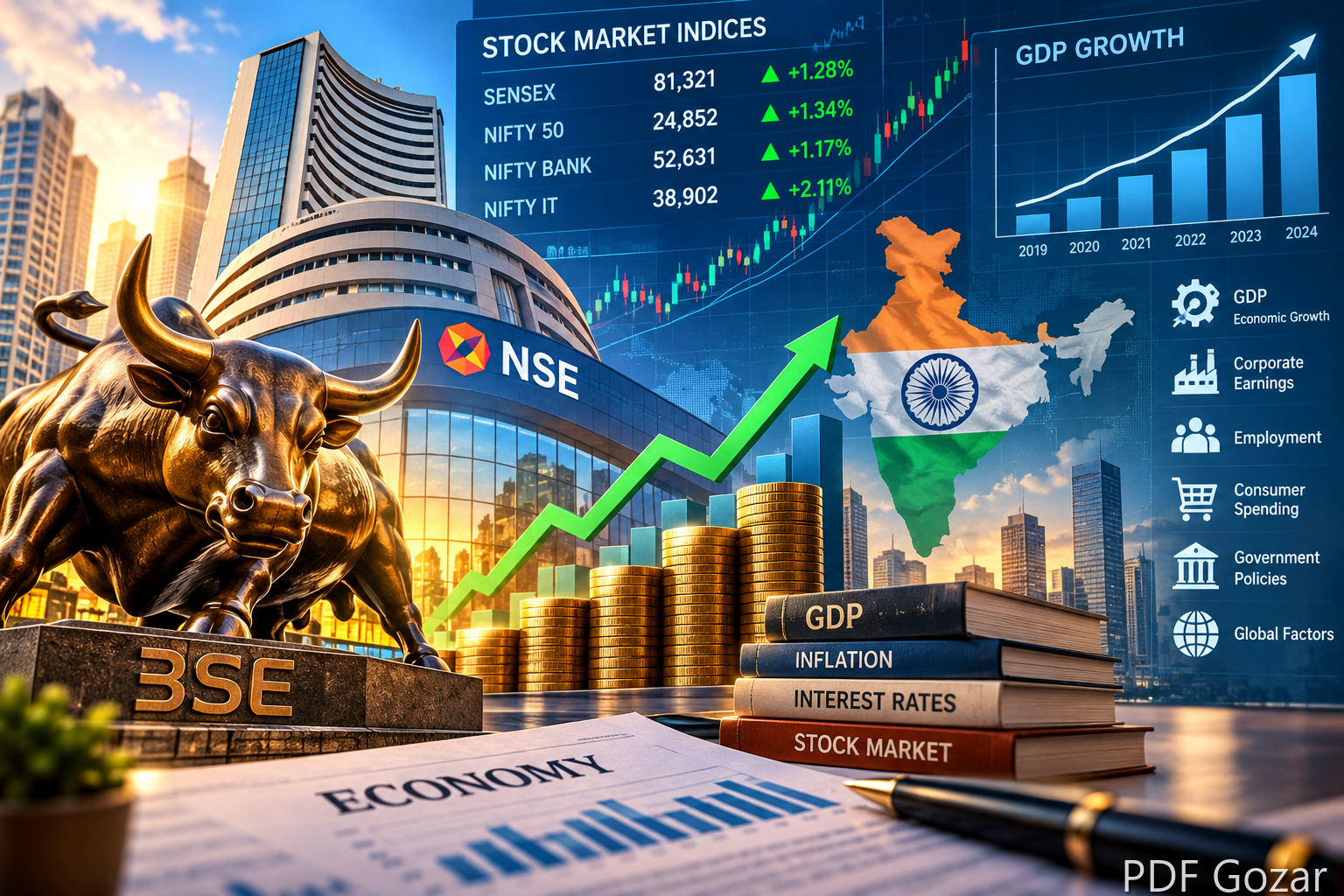
In 2020, the stock market crashed and then recovered at record speed while businesses were still closing. This disconnect confuses many investors. The truth is simple: the stock market is not the economy, but they influence each other in powerful ways.
Understanding how stock market indices relate to economic health helps you make smarter investment decisions. Let’s break down this connection.
What Are Stock Market Indices?#
A stock market index tracks the performance of a group of stocks. It acts as a benchmark for the overall market or a specific sector.
Major Indian indices:
- NIFTY 50 — top 50 companies on NSE
- SENSEX — top 30 companies on BSE
- NIFTY Bank — banking sector performance
- NIFTY IT — technology sector performance
These indices help you understand market trends without tracking every individual stock.
Stock Market vs Economy: The Real Connection#
The stock market and economy move together over the long term, but they can diverge in the short term. Here is why:
- Markets are forward-looking — investors price in future expectations, not current conditions
- Economy lags behind — GDP data comes months after actual economic activity
- Global factors — foreign investors can push markets up or down regardless of domestic economy
This is why markets can rise during a recession if investors expect recovery ahead.
Indices as Leading Economic Indicators#
Stock indices often predict economic changes before they happen. Watch these signals:
- Sector rotation — money moving from growth to defensive stocks signals economic slowdown
- Bear markets — extended market declines often precede recessions
- Market breadth — how many stocks are rising vs falling indicates market health
How Different Sectors Perform in Economic Cycles#
During economic expansion:
- Banking and financial stocks outperform
- Consumer discretionary (cars, electronics) rises
- IT and technology sectors grow
During economic slowdown:
- FMCG and healthcare stocks hold value
- Gold and precious metals attract safe-haven money
- Utilities and essential services remain stable
Global Indices and Their Impact on India#
Indian markets don’t exist in isolation. Global events affect domestic indices through:
- Foreign institutional investors (FIIs) — their buying/selling moves Indian markets
- US Federal Reserve decisions — interest rate changes affect global capital flows
- Crude oil prices — India imports 80% of its oil needs
How to Use Index Data for Investment#
Follow these steps to make better decisions:
- Track major indices — NIFTY 50 and SENSEX give market direction
- Watch sector indices — identify which sectors are leading or lagging
- Compare with economic data — GDP growth, inflation, and interest rates
- Look for divergences — when markets and economy move opposite directions
Key Takeaways#
- Stock indices track market performance, not the entire economy
- Markets are forward-looking, economy data lags behind
- Sector rotation signals economic cycle changes
- Global events impact Indian markets through FII flows
- Use index data alongside economic indicators for better decisions
Want to start investing? Track NIFTY 50 and SENSEX daily. Watch how they respond to economic news. Over time, you will start seeing the patterns.