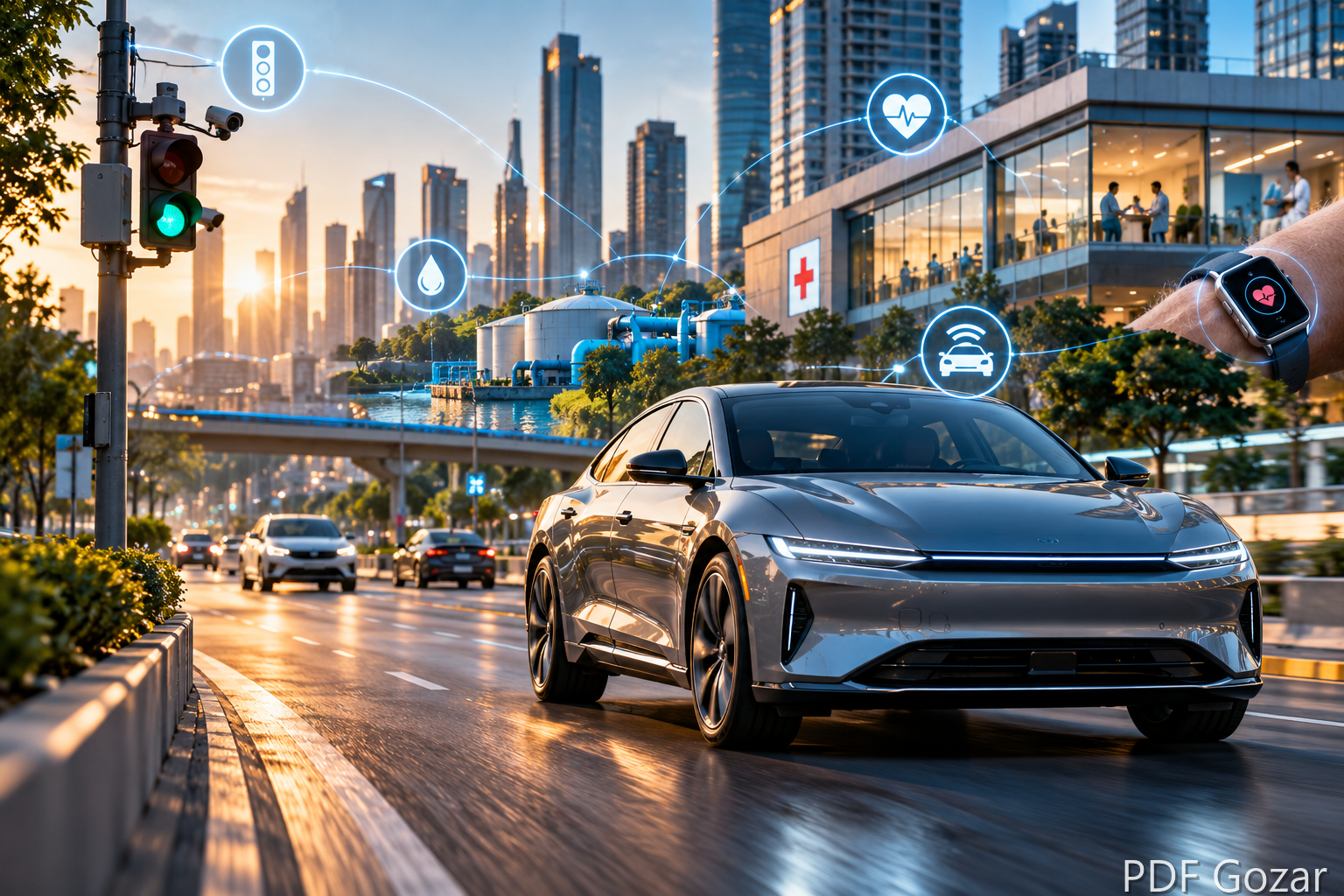
Internet of Things Examples in Cities, Health, and Cars
Some internet of things examples sit in a kitchen. Others sit in an intersection, on a patient, or in a car that reports its own brakes. The stakes change with the setting. A porch light that drops offline is an inconvenience. A water sensor, a glucose monitor, or a fleet truck that loses its brakes alert is a safety problem.
This guide covers public infrastructure, health devices, and vehicles in the United States. It stays practical: what the object senses, who is supposed to act, and what can go wrong. Homes are in IoT examples at home. Warehouses, factories, farms, and stores are in IoT examples in business.
What “smart city” usually means#
A smart city project connects equipment the city already owns. The winning examples replace a truck roll or a guess with a measurement.
Common ones:
- Streetlights that dim when the block is empty and brighten for a crosswalk or a work crew
- Parking sensors that show open spaces so drivers stop circling a downtown block
- Traffic signals that adjust timing from detectors in the pavement or on cameras
- Trash bins that report when they are full so a route skips empty cans
- Air-quality and noise monitors on poles, used to see which corridors stay dirty
- Water meters and acoustic sensors that listen for leaks in mains
Each one fails in a familiar way. Lights need a maintenance crew that can replace a node, not only a dashboard. Parking apps anger residents if the city tickets from the same sensor without clear signs. Adaptive signals can favor a main road and leave a side street waiting. Leak listening gear still needs a crew to dig. The sensor finds the block. It does not fix the pipe.
Treat public Wi-Fi kiosks and “innovation districts” as separate from this list. A hot spot is a network. It is not, by itself, an example of the internet of things.
Water, waste, and weather#
Utilities are some of the clearest public examples because the cost of being wrong is obvious.
Advanced water meters send readings without a person walking the route. Customers can see a spike that means a running toilet. The utility can see a neighborhood pattern after a freeze. Acoustic leak sensors and pressure loggers sit on the distribution system and narrow a search.
Wastewater and storm systems use level sensors so operators know a basin is rising before a street floods. River and rain gauges feed the same picture. These are old ideas with better radios. The value is earlier notice, not a new app icon.
Sanitation departments use bin sensors and truck GPS to rebuild routes. The savings show up as fewer miles, not as a citizen-facing feature. If a vendor demo leads with a phone map and never mentions missed pickups or overtime, ask for the route report.
Health devices people wear or keep at home#
Consumer health IoT is already common. A watch estimates heart rate and can detect a hard fall. A continuous glucose monitor reads interstitial fluid and sends numbers to a phone. A blood pressure cuff stores a week of readings. A smart scale uploads weight. A connected pill bottle can record when it was opened, which is not the same thing as proving a dose was swallowed.
These examples help when a person, or their clinician, will look at the trend and change a habit or a prescription. They do not help when the device is a gift that nobody checks. They are also not a diagnosis. A watch alert is a reason to contact a clinician or emergency services, not a reason to decide you are fine because an app score looks calm.
Clinics and hospitals use a stricter set:
- Infusion pumps and vital-sign monitors on a network, so a nurse sees a change without standing at the bedside every minute
- Asset tags on shared pumps and wheelchairs so staff stop hunting closets
- Temperature loggers on vaccine and medication fridges
- Bed-exit or fall-detection sensors in some wards
Hospitals have to assume the device can be a security hole. Pumps and monitors should not sit on the same open network as guest Wi-Fi. Patches, access lists, and a plan for what still works when the network fails belong in the purchase, not in a later project.
Privacy is part of the product. Home devices may sit outside the rules that cover a hospital record, depending on who sells them and where the data goes. Read the policy before you connect a monitor that shares with an employer, an insurer, or an ad network.
Connected cars and fleets#
A modern car is a rolling set of sensors: speed, brake pressure, tire pressure, cameras, and GPS. The internet of things piece is the radio that sends some of that data off the vehicle.
Drivers meet it as:
- An app that locks the car, checks charge or fuel, and starts the climate control
- Over-the-air software updates
- Automatic crash notification that calls for help after a severe impact
- Navigation that reroutes from live traffic
Fleet managers meet a deeper version. Telematics boxes report harsh braking, idling, engine faults, and location. Insurers and carriers use the same idea in usage-based policies. The argument for it is fewer crashes and less wasted fuel. The argument against it is that someone else holds a detailed map of your driving. Know whether the program is opt-in, what it stores, and whether a single hard stop on a wet freeway counts against you.
Electric vehicles add charger examples. A home charger can wait for a cheaper overnight rate. A depot can stagger trucks so they do not all pull peak power at 5 p.m. The charger is IoT when it reports session energy and faults, not merely when it has a cable.
Vehicle-to-everything experiments let a car hear a signal from a light or another car. Most U.S. driving still does not depend on that. Do not plan a safety case on a radio link that the other vehicle might not have.
What to demand from any of these systems#
Across cities, clinics, and cars, the useful test is the same.
- Name the decision a person makes differently because of the data.
- Name the fallback when the radio or the vendor is down.
- Name who is allowed to see location, health, or driving history, and for how long.
- Keep an export you control: calibration, incident logs, consent forms, and service records.
Public agencies and clinics already live on documents. A leak alert, a vaccine-fridge excursion, or a crash-notification record should land in a file, not only in a portal. Combine the vendor report with your own notes using merge PDF. Shrink a thick service packet with compress PDF before you email a regulator or an insurer. If you need to black out a patient’s identifiers or a driver’s home address before sharing, edit the PDF and keep the unredacted original in a tighter folder.
Examples that sound advanced and underdeliver#
A few patterns absorb budget without changing operations:
- A city dashboard that reprints numbers the department already had in a spreadsheet
- A wearable program at work that ranks employees and calls it wellness
- A connected feature in a car that only works while you pay a subscription for remote start
- Sensors installed for a grant period, with no budget to replace batteries in year three
Ask who pays for the second and third year before you praise the pilot. Hardware on a pole or in a body is a long obligation.
FAQ#
Are traffic cameras IoT?#
A camera that stores video for later review is a recorder. It fits this topic when software reads the image and changes a signal, opens a gate, or counts vehicles for a timing plan. The privacy questions remain either way.
Can a glucose monitor or watch replace a doctor visit?#
No. These devices can show a trend between visits. Dosing and diagnosis stay with a licensed clinician. If a device warns of a possible emergency, use local emergency services.
Do connected cars track you all the time?#
Many can report location when a connected service is on, and some store trip data. Read the automaker’s privacy notice and the settings in the car’s app. Turn off sharing you do not want, and remember that crash notification and theft recovery use location on purpose.
Is a smart parking meter worth it for a small town?#
It can be, if staff currently drive around to mark tires or if drivers truly cannot find a space. It is a weak buy if the town has surplus parking and the main cost is the monthly network fee.
Where to go next#
Use public and medical IoT where a measurement prevents a missed leak, a spoiled vaccine, or a slow emergency response. Use vehicle IoT where a fault code or a driving pattern changes maintenance or coaching. Leave the rest on a wish list until someone owns the alert.
For a smaller version of the same idea, start with home IoT examples. For plants, freight, and farms, use business IoT examples.