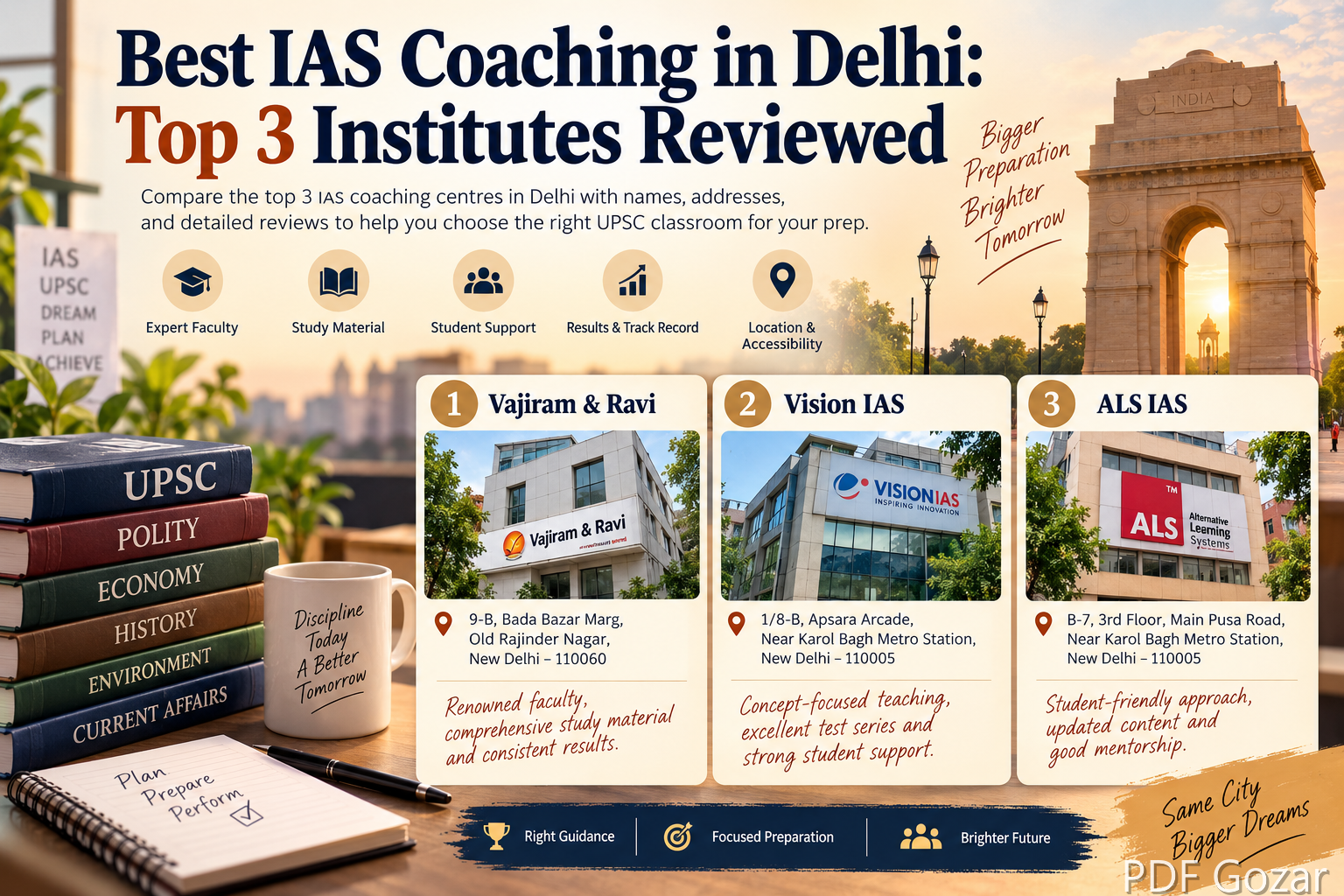
Delhi remains the most crowded and competitive hub for UPSC Civil Services preparation. Old Rajinder Nagar, Karol Bagh, and Mukherjee Nagar form a dense ecosystem of classrooms, hostels, bookshops, and peer groups. That density helps—but it also makes choosing a coaching centre harder.
This guide covers three widely preferred IAS institutes in Delhi. For each, you get the name, a clear address, and a detailed review of teaching style, support for Prelims and Mains, and who the institute suits best. There are no website links here—only practical information you can use before you visit in person.
1. Vajiram & Ravi#
Address: 1-B/7, Pusa Road, Old Rajinder Nagar, New Delhi – 110060 (near Karol Bagh Metro Gate 5 / Pillar No. 103)
Vajiram & Ravi is one of the oldest and most recognised classroom brands for UPSC in Delhi. Many aspirants shortlist it first because of brand familiarity, a long classroom tradition, and a structured General Studies programme that covers Prelims and Mains together.
What the teaching feels like#
Classes are typically lecture-driven and syllabus-oriented. Faculty focus on building a strong base in Polity, History, Economy, Geography, and Ethics, then linking those themes to current affairs. The pace can feel fast if you are completely new to the syllabus, so beginners often need extra self-study hours outside class.
Study material and class notes are a big part of the experience. Students who revise notes regularly and pair them with NCERTs usually do better than those who treat coaching as a substitute for reading.
Prelims, Mains, and Interview support#
The institute is known for a full-cycle classroom approach: foundation coverage, test practice, and answer-writing orientation. Mock tests and revision cycles matter here—treat them as non-negotiable, not optional. Interview guidance is available for students who clear Mains, which is useful if you want continuity with the same academic ecosystem.
Who it suits (and who should pause)#
Vajiram suits aspirants who want a well-known classroom brand, can handle larger batches, and are ready to study independently after lectures. It may feel overwhelming if you need very small batches or one-to-one doubt clearing every day. Visit a demo or orientation session, ask about batch size for your intended programme, and check commute time from your PG or hostel before you pay.
2. Vision IAS#
Address: 2nd Floor, 1/8, Apsara Arcade, Near Gate-7, Karol Bagh Metro Station, Pusa Road, Karol Bagh, New Delhi – 110005
Vision IAS is widely preferred for its test-series culture and structured current-affairs support. Many aspirants use Vision even when their main classroom is elsewhere, which says a lot about how strongly its evaluation ecosystem is trusted.
What the teaching feels like#
Vision blends classroom teaching with a strong assessment backbone. Lectures aim for conceptual clarity, but the real differentiator for many students is how regularly they are pushed to write, revise, and analyse mistakes through tests. If you are disciplined about reviewing every mock, Vision’s system can sharpen both Prelims accuracy and Mains answer structure.
Current affairs modules and monthly compilations are a practical advantage. They help you avoid drowning in newspapers while still staying exam-relevant.
Prelims, Mains, and Interview support#
Prelims test series and Abhyaas-style full-length practice are a major reason students join. For Mains, answer-writing practice and evaluation feedback are central. Interview guidance is typically available for qualified candidates. The classroom and test culture works best when you treat feedback seriously and rebuild weak areas week by week.
Who it suits (and who should pause)#
Vision suits aspirants who want structure through tests, not only lectures. It is a strong fit if you already have some reading base and need a system to convert knowledge into marks. If you expect hand-holding for every topic from zero, clarify foundation-batch options during counselling. Also confirm which exact Karol Bagh / Pusa Road classroom your batch uses, since Vision operates multiple enquiry and classroom points in Delhi.
3. Drishti IAS#
Address: 641, 1st Floor, Dr. Mukherjee Nagar, Opp. Signature View Apartment, New Delhi – 110009
Drishti IAS has a strong presence in Mukherjee Nagar and is especially popular among Hindi-medium and bilingual aspirants. For many students from North India, Drishti feels more accessible in language, examples, and classroom communication than purely English-heavy environments.
What the teaching feels like#
Teaching is classroom-centric with an emphasis on clarity and exam-oriented explanation. Faculty often connect theory with simple examples, which helps first-time aspirants. Notes and magazines from the Drishti ecosystem are widely used for current affairs and GS revision.
Batch culture in Mukherjee Nagar is intense: many hostels, libraries, and peer groups sit around the same streets. That can be motivating, but it can also create noise and comparison stress. Protect your routine.
Prelims, Mains, and Interview support#
Drishti covers foundation GS, current affairs, and answer-writing practice. Hindi-medium support is a genuine strength for aspirants who think and write better in Hindi. Mains answer practice and interview guidance are part of the broader offering; ask specifically what is included in your fee package versus charged separately.
Who it suits (and who should pause)#
Drishti suits Hindi-medium or bilingual students, beginners who want clearer classroom explanation, and aspirants already living in or near Mukherjee Nagar. English-medium students who prefer a very Delhi “Rajinder Nagar” peer culture may still find Drishti useful, but should attend demos and compare teaching language comfort before deciding.
How to choose among these three#
Use this short checklist before admission:
- Language medium: Confirm English, Hindi, or bilingual delivery for your exact batch.
- Batch size and timing: Morning vs evening matters if you are working or commuting.
- Demo class: Sit through at least one lecture and one counselling session.
- Fee inclusions: Ask what tests, material, and interview guidance are included.
- Distance: Daily travel in Delhi drains energy; pick a centre you can sustain for 10–12 months.
- Your stage: Complete beginner, working professional, or Mains-focused repeater—each needs a different fit.
There is no single “best” institute for every aspirant. The right choice is the one whose teaching language, schedule, and evaluation system you will actually follow every day.
Practical tips before you join in Delhi#
Delhi coaching works only when your living setup supports long study days. Keep these points in mind:
- Finalise a PG or hostel within a realistic commute of your shortlisted centre. Saving a little rent and losing two hours daily is a bad trade.
- Budget for more than tuition: rent, food, photocopies, test series, and unexpected batch add-ons.
- Do not buy every market note bundle in the first week. Start with class notes, NCERTs, and one standard book per subject.
- Protect sleep and revision slots. Classroom hours without same-day revision create an illusion of progress.
- Reassess after 6–8 weeks. If teaching pace or language does not fit, switch early rather than drifting for a full year.
A good institute reduces confusion. It cannot replace timed practice, newspaper discipline, and honest weak-area repair.
FAQ#
Is Delhi necessary for UPSC coaching?#
No. Many candidates clear UPSC from other cities or through online programmes. Delhi helps because of peer pressure, book access, and classroom density—but it also costs more in rent and living expenses.
Should I join all three test series?#
Usually no. Pick one primary classroom and one serious test series you can finish and analyse. Overloading mocks without revision reduces returns.
When should I visit centres in Delhi?#
Visit before peak admission rush if possible. Carry questions on batch start date, medium, fee breakup, and refund policy. Talk to current students outside the centre for unfiltered feedback.
Can working professionals manage Delhi classroom coaching?#
Yes, if evening or weekend options exist and your commute is realistic. Otherwise, hybrid or online-first plans may work better than forcing a daily classroom that you cannot attend.
Conclusion#
Vajiram & Ravi, Vision IAS, and Drishti IAS remain three of the most discussed IAS coaching options in Delhi for different reasons: classroom brand strength, test-driven structure, and Hindi/bilingual accessibility. Shortlist based on medium and learning style, verify the address and batch details in person, and commit to a routine you can sustain. Coaching can organise your prep—consistent self-study still decides the result.