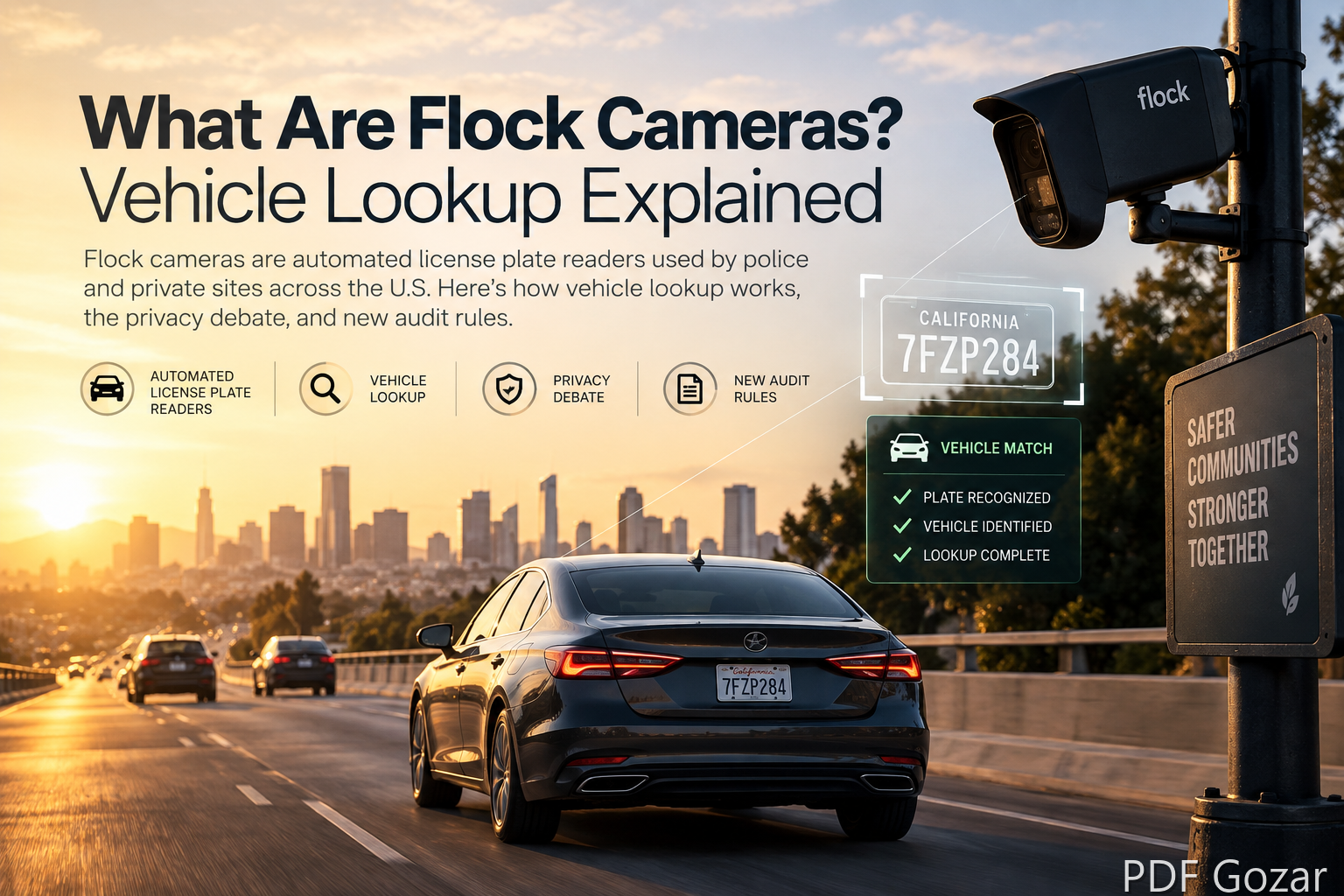
What Are Flock Cameras? Vehicle Lookup Explained#
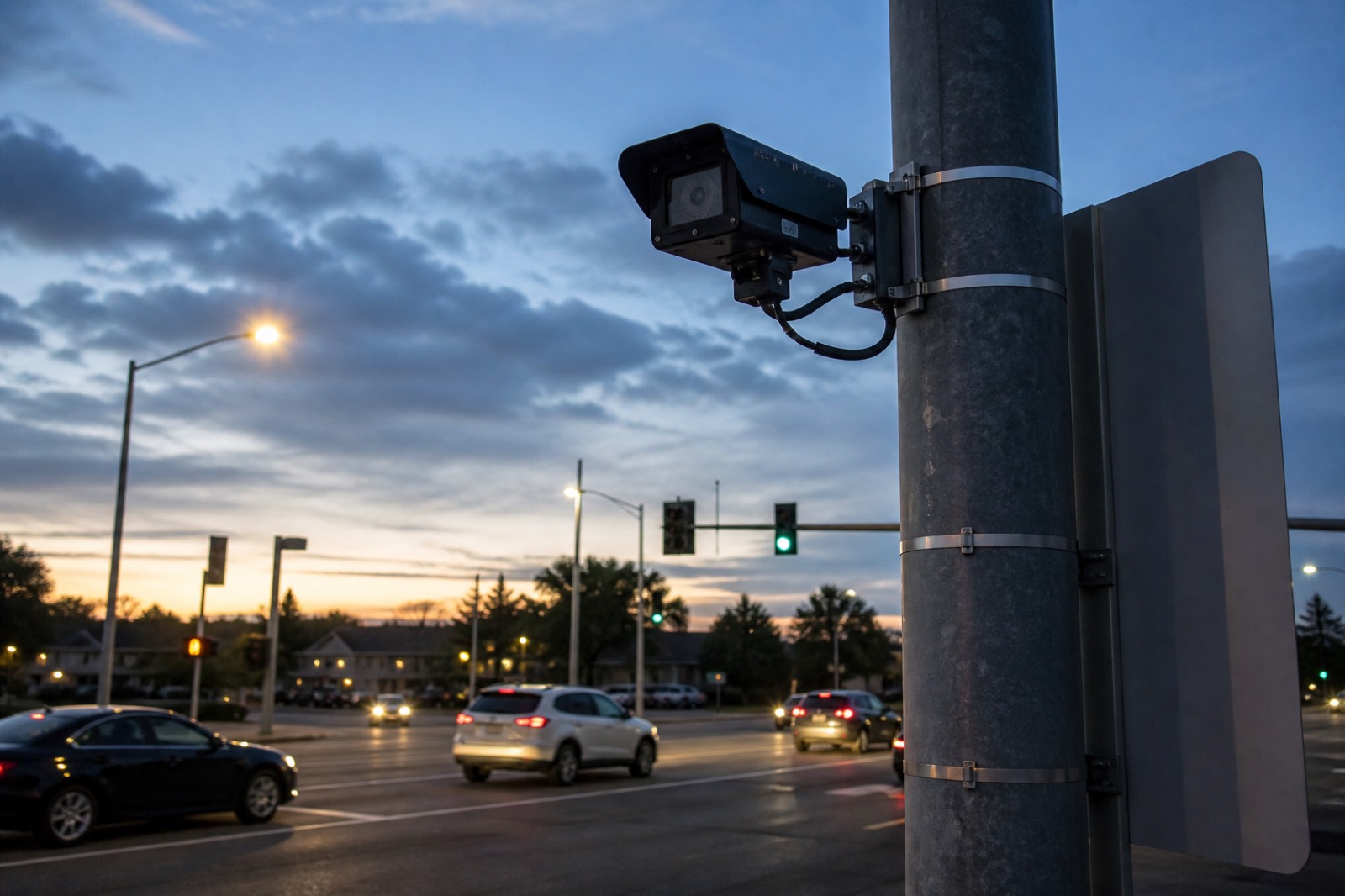
Flock cameras are automated license plate readers (ALPRs) made by Atlanta-based Flock Safety. They sit on poles along roads, in neighborhoods, and at some businesses. When a car passes, the system captures an image and turns plate, color, make, model, and extra details into searchable data.
U.S. searches for “flock cameras,” “vehicle flock camera lookup,” and related terms jumped in August 2026 as maps, privacy fights, and new company audit rules hit the news. This explainer covers what they record, who can search, how to see if they are near you, and what changed in the software.
Flock Is a Brand, Not the Only Camera#
People say “Flock camera” the way they say “Kleenex.” Flock Safety is one vendor. Motorola Solutions, Genetec, Axis, and others also sell ALPRs. If you care about a specific pole in your town, the contractor might not be Flock—but Flock is the name driving national search.
As of late June 2026, Flock said it ran more than 120,000 cameras in 49 states (not Alaska). Volunteer project DeFlock counted more than 127,000 ALPRs of all brands in early August. Flock has said it contracts with on the order of 7,000 law enforcement agencies—a large share of U.S. departments. Pricing cited in reporting is about $3,000 per camera per year, with install, maintenance, database, and “hot list” alerts included.
What a Pass Records#
When a vehicle rolls by, systems like Flock’s typically store:
- License plate
- Time and date
- Location (which camera)
- Make, model, color
- Extra visual details: bumper stickers, roof racks, dents, scratches
Flock says its plate readers do not use facial recognition. The product is vehicle-centric. Newer AI search lets officers query in plain language or incomplete descriptions (“dark SUV with rear bumper damage”), not only a full plate.
Hot lists can flag stolen cars or plates tied to missing or wanted people, then alert agencies in seconds. Police argue that is how you find a suspect vehicle after a crime. Critics argue it is a searchable history of ordinary driving.
What “Vehicle Flock Camera Lookup” Means#
There is no public “type your plate, see every ping” app from Flock for drivers. Lookup in Trends usually means one of these:
- Police search — An officer queries the network (sometimes “all networks”) by plate or description, with a crime type. Results show matching images, time, place, and which agency’s camera hit.
- Citizen maps — Sites such as DeFlock map camera locations from open sources. Have I Been Flocked? and similar projects try to show whether a plate appeared in ALPR data. These are third-party tools, not Flock’s consumer portal. Accuracy and coverage vary.
- News explainers — People searching after a local council vote or a viral video of a pole camera.
Default photo retention has been described as 30 days, with agencies able to change that. Later 2026 product updates discussed shorter defaults (including talk of seven days in some accountability rollouts). Always check what your city contracted—not a national headline.
Why People Are Upset#
Documented misuse is the core of the backlash. Example cited in national coverage: a former Milwaukee officer who, court papers said, used Flock to search a romantic partner’s location 124 times. That is stalking with a police tool, not a stolen-car ping.
Broader worries:
- Continuous tracking of people who are not suspects
- Sharing across thousands of agencies with uneven oversight
- Private HOAs or businesses feeding the same kind of data
- Errors (wrong plate, wrong car) leading to stops
Supporters point to cases where ALPRs helped find violent suspects or a vehicle tied to a high-profile crime. Both can be true: useful for investigations, risky without logs and limits.
New Audit Rules (August 2026)#
After scrutiny, Flock announced tighter controls, including:
- Audit Assistance required for customers by year-end—flags abnormal search behavior by an officer
- Case numbers to justify most searches (with exceptions for genuine emergencies, per the company)
- Stricter access and “reason for search” fields
CNN and local papers framed this as a response to surveillance and misuse stories. Rules on paper matter only if agencies use them and auditors actually review logs.
How to Check Your Area#
- Search your city + “Flock” + “city council” for contracts.
- Use volunteer maps (DeFlock and similar) as a starting point, not gospel.
- Ask the police department or records office what vendor you have, retention days, and who can query.
- Public-records requests often return PDFs: contracts, policies, audit summaries.
When those files arrive as a stack of scans, Merge PDF builds one packet and Compress PDF gets them under email limits. Pull a single exhibit with Split PDF.
This is not legal advice. If you believe a search was abusive, talk to a lawyer or a civil-liberties group in your state.
FAQ#
What are Flock cameras?#
Automated license plate readers from Flock Safety that photograph passing vehicles and store searchable plate and vehicle details for police and some private customers.
Can I look up my own car?#
Not through a simple official public lookup. Third-party sites attempt maps or plate checks; police lookup is for agencies.
Do they use facial recognition?#
Flock says its ALPR product does not.
How long is data kept?#
Often cited as about 30 days by default, configurable by the customer; newer policies may shorten that. Confirm locally.
Why are Flock cameras trending?#
National maps, privacy debates, misuse cases, and new audit features hit U.S. news in August 2026.
Conclusion#
Flock cameras are a nationwide ALPR network: plates in, searchable vehicle history out. Police call it crime-solving. Critics call it mass tracking. Vehicle lookup is mostly an officer tool, plus unofficial maps for the public. If a pole just went up on your corner, read the local contract—and keep the PDFs in one file you can actually search.