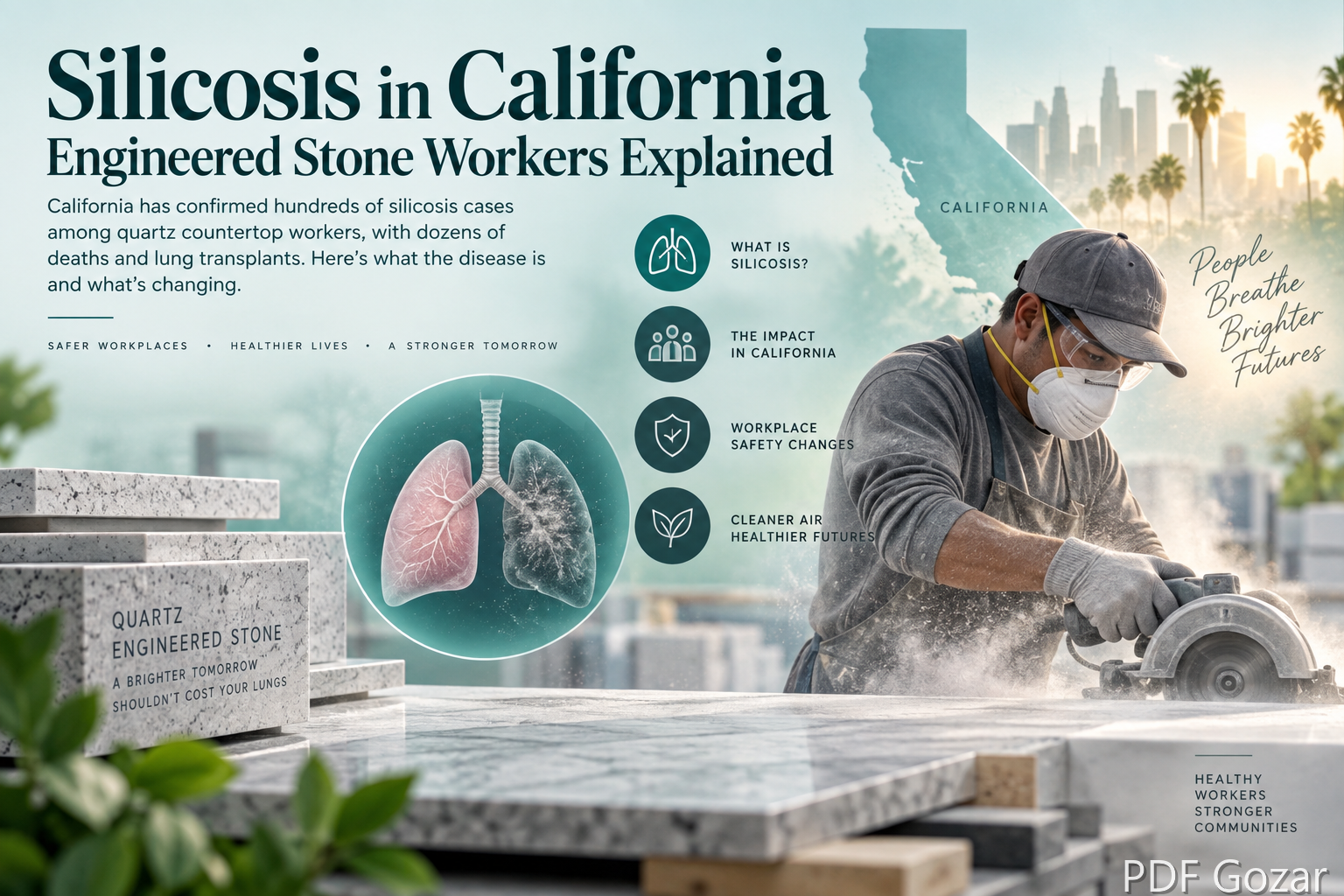
Silicosis in California Engineered Stone Workers Explained#
Silicosis is an incurable lung disease caused by breathing tiny particles of crystalline silica. In August 2026, U.S. attention spiked again after public-health reporting highlighted a large outbreak among California workers who cut and polish engineered stone—the popular “quartz” countertops in kitchens and bathrooms.
California Department of Public Health (CDPH) data cited in national coverage showed about 618 confirmed cases and 32 deaths among fabrication workers as figures continued to rise. A detailed analysis in NEJM Evidence, covering January 2019 through June 2026, documented 592 cases, including 65 lung transplants and 31 deaths in that window.
This explainer covers what engineered stone is, why the disease hits young workers hard, what California already changed in law, and what homeowners and clinicians should ask.
What Is Engineered Stone?#
Engineered stone (often marketed as quartz) is made by crushing natural quartz into fine powder, then binding it with polyester resins and pigments. Finished slabs commonly contain more than 90% crystalline silica—far higher than many natural stones.
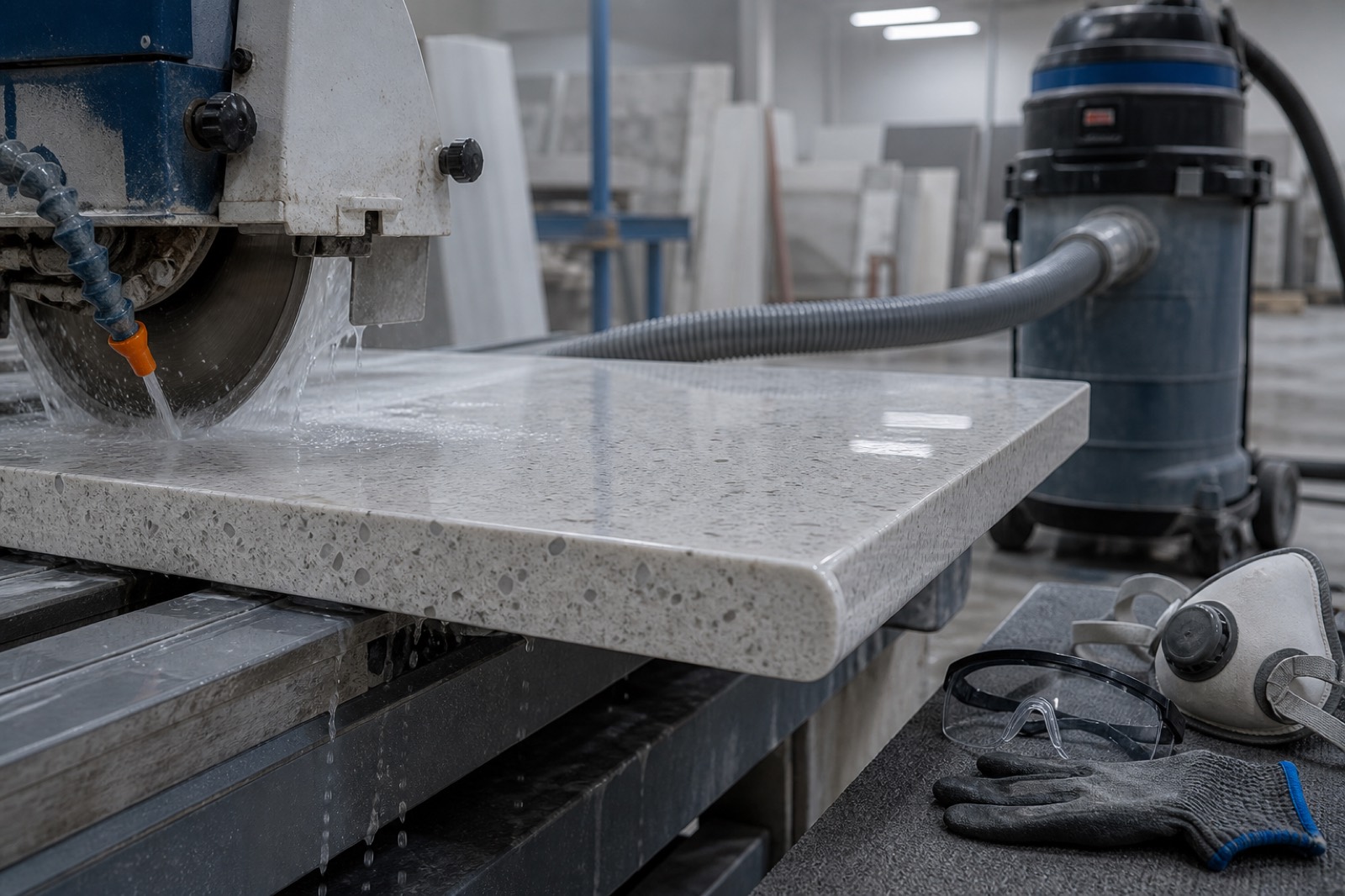
Fabrication shops cut, grind, and polish those slabs to fit kitchens. Dry cutting and poor dust control throw respirable silica into the air. Workers inhale it. Over months or years, scar tissue forms in the lungs. Breathing gets harder. In severe cases, people need transplants—or die of respiratory failure.
Safer work methods exist (wet cutting, local exhaust, respirators rated for silica). The outbreak shows those controls were not always used or enforced.
The California Numbers Behind the Trend#
CDPH identified the state’s first known countertop-related silicosis case in January 2019: a worker diagnosed at 32 who later died of respiratory failure at 38. Investigators found more cases at the same shop, screened current employees, and expanded surveillance using hospital data, electronic reporting, and clinician tips.
Through June 2026, the published analysis counted:
| Measure | Figure |
|---|---|
| Confirmed engineered-stone silicosis cases | 592 |
| Lung transplants | 65 (about 11%) |
| Referred for transplant | 138 (about 23%) |
| Deaths in the study window | 31 |
| Median age at diagnosis | about 46 |
| Mean age at death (among those who died) | about 52 |
Later CDPH tallies reported in news coverage climbed to 618 cases and 32 deaths, meaning diagnoses kept arriving after the study cutoff. Officials stress totals are likely underestimates—screening is inconsistent, and silicosis is often misdiagnosed at first.
Cases stand out for young age, relatively short exposure careers, fast progression, and frequent overlap with other silica-related problems such as autoimmune disease and tuberculosis.
Why Homeowners Should Care#
Quartz remains one of the most popular countertop choices in the United States. Choosing a slab does not make a homeowner medically “exposed” the way daily fabrication does. The ethical and practical questions are different:
- Was the shop using wet methods and proper ventilation?
- Are workers trained under California’s newer rules?
- Are cheaper bids skipping dust controls?
If you are remodeling, ask fabricators how they cut stone and whether they follow Cal/OSHA silica standards. Price-only shopping can externalize health costs onto workers.
California Policy Response#
Surveillance helped drive regulation:
- 2023 emergency silica rules from the Occupational Safety and Health Standards Board, made permanent in early 2025, strengthened Cal/OSHA requirements.
- Senate Bill 20 (Silicosis Training, Outreach, and Prevention Act), signed in 2025, bans dry cutting and other high-exposure practices, requires safer wet methods and training, and hardens reporting when cases appear.
- From July 2026, employers must annually attest to Cal/OSHA that required training was completed.
- Silicosis is a reportable disease in California; providers must report suspected cases to local health departments.
Researchers—including former OSHA leader David Michaels among co-authors of related commentary—argue California’s data should push a national surveillance and prevention push. Enforcement remains hard across small shops.
Symptoms and Medical Reality Check#
Silicosis can begin with cough, sputum, shortness of breath, or fatigue. Advanced disease brings progressive respiratory failure. There is no cure that reverses scarring. Treatment focuses on slowing decline, treating infections, oxygen, and—in select patients—transplant.
CDPH advisories urge clinicians to ask about work. Countertop fabricators—even without classic symptoms—may need targeted testing. Waiting for late-stage imaging costs lives.
This article is not medical advice. Workers with breathing changes after stone dust exposure should see a clinician familiar with occupational lung disease.
Documents Workers and Clinics Often Need#
Occupational cases generate paperwork: exposure histories, clinic notes, workers’ compensation forms, and imaging reports—usually PDFs.
- Combine records with Merge PDF before an appointment or attorney review.
- Shrink large scan packets with Compress PDF for portals that cap upload size.
- Extract one report page with Split PDF when a specialist only needs the latest CT summary.
Keep originals. Name files by date so nothing gets overwritten.
FAQ#
What causes silicosis in countertop workers?#
Inhaling respirable crystalline silica dust from cutting and polishing engineered stone with high quartz content, especially without wet methods and dust controls.
How many California cases are there?#
A 2019–June 2026 analysis counted 592 engineered-stone cases (65 transplants, 31 deaths). Later CDPH figures cited in reporting reached about 618 cases and 32 deaths.
Is silicosis contagious?#
No. It is caused by dust exposure, not a virus or bacteria—though silica-damaged lungs can be more vulnerable to infections such as tuberculosis.
Did California ban quartz countertops?#
No. Rules target how stone is fabricated (for example banning dry cutting) and require training, reporting, and safer methods—not a total product ban.
Why was silicosis trending in the United States?#
New research and public-health alerts on hundreds of young California workers—plus deaths and transplants—drove national searches for “silicosis” and engineered-stone exposure.
Conclusion#
California’s engineered-stone silicosis outbreak is a preventable occupational disaster measured in hundreds of lungs, dozens of transplants, and too many deaths at working age. For readers following the trend, the takeaway is clear: high-silica quartz dust plus dry fabrication is deadly, policy is tightening, and clinicians must ask about countertop work. If you handle the paperwork side of a case, keep medical PDFs organized, compressed, and ready to share.