Nearly 1.4 billion adults worldwide remain unbanked. They cannot save, invest, or get credit during emergencies. Traditional banks rejected them because they had no collateral. Microfinance Institutions changed this.
MFIs provide small loans, insurance, and savings products to people excluded from formal banking. Here is how they work and why they matter.
What Are Microfinance Institutions?#
MFIs are financial organizations that serve low-income individuals and small businesses. They provide micro-loans, micro-savings, and micro-insurance products.
Key difference from banks:
- Loans given without traditional collateral
- Smaller loan amounts (usually Rs 1,000 to Rs 1 lakh)
- Focus on rural and underserved communities
- Group lending model for social accountability
How Microfinance Works#
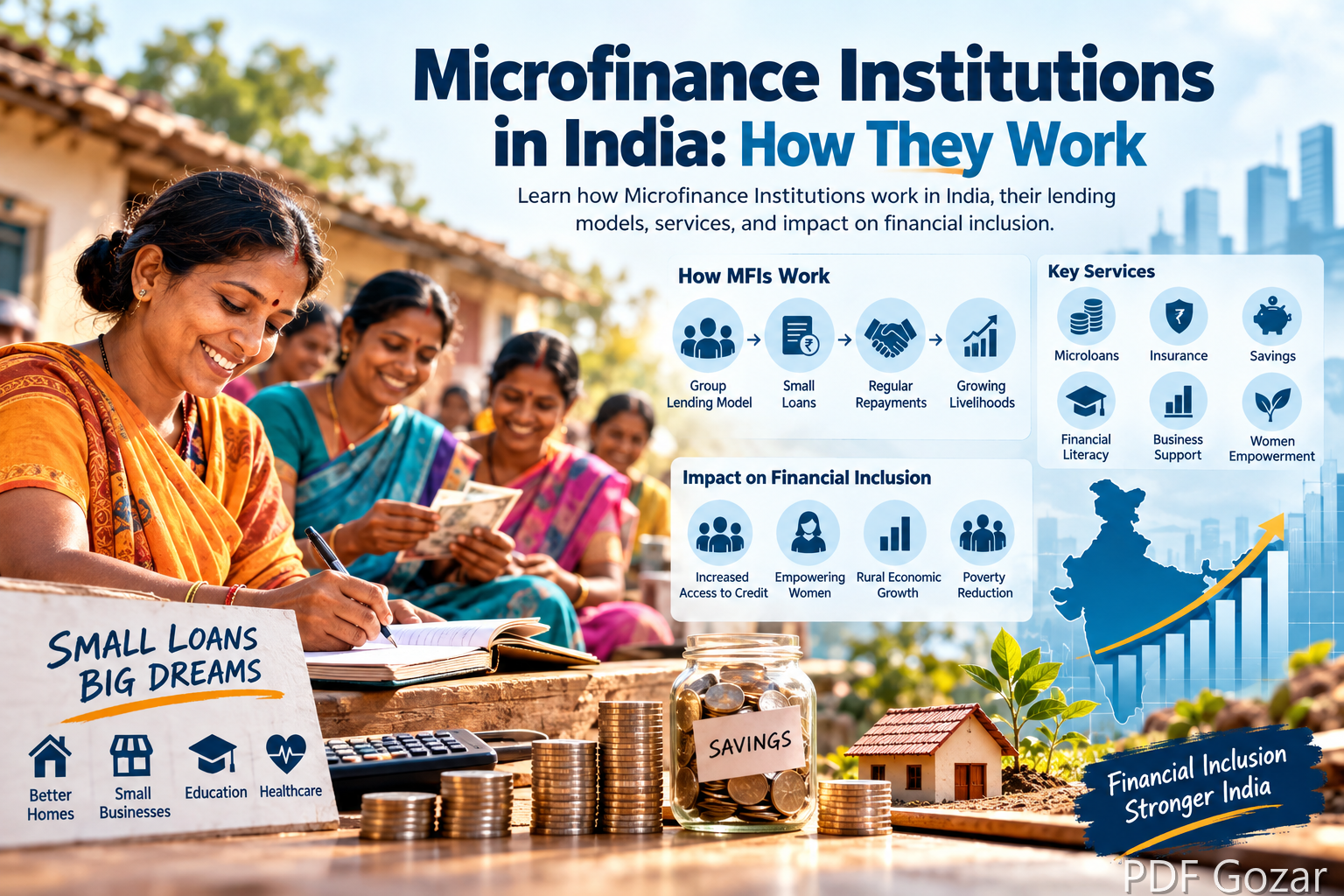
MFIs use a group lending model where borrowers form small groups. Each member guarantees the others’ loans. This creates social pressure to repay.
The process:
- Group of 5-10 members formed
- Weekly meetings for repayments
- Loans start small, increase with good repayment
- Interest rates cover operational costs
Types of Microfinance Services#
- Micro-credit — small loans for business or personal use
- Micro-savings — savings accounts with small deposit requirements
- Micro-insurance — affordable insurance for health, crop, and life
- Micro-remittances — low-cost money transfer services
Major MFIs in India#
India has several leading MFIs including:
- Bandhan Bank — started as an MFI, now a full bank
- BASIX — one of the oldest MFIs in India
- Satyam Microfin — serves rural women entrepreneurs
- Spandana — focuses on self-help groups
Benefits of Microfinance#
- Empowers women through self-help groups
- Creates self-employment opportunities
- Reduces dependency on moneylenders
- Builds financial literacy in rural areas
Challenges Facing MFIs#
- High operational costs due to small loan sizes
- Risk of over-indebtedness among borrowers
- Regulatory compliance requirements
- Limited reach in remote areas
Key Takeaways#
- MFIs serve people excluded from traditional banking
- Group lending model uses social collateral instead of property
- Services include credit, savings, insurance, and remittances
- India has major MFIs like Bandhan, BASIX, and Spandana
- Microfinance empowers women and reduces poverty
Interested in microfinance? Contact your nearest MFI or check if your bank offers micro-loans. Small credit can start big businesses.